Opinion: Fans Wanted Leon. Zach Cregger’s ‘Resident Evil’ Proves They Asked the Wrong Question
Zach Cregger made the best-reviewed video game movie on record, watched it close in on $400 million worldwide, and still spent part of a recent podcast appearance explaining why the whole experience wore him down. That sentence alone tells you something has gone sideways in how we talk about game adaptations.
Here's my take, and I'll defend it with numbers: the fans who spent six months furious that Resident Evil didn't star Leon Kennedy were asking the wrong question. Fidelity to a game's cast and plot has never predicted whether one of these movies is any good, and in this franchise it hasn't even predicted whether one makes money. Hollywood has a lot more of these coming. Fans should want a better test before the next one arrives.
The Trailer That Started the Argument
What Cregger Actually Said
The latest round started with Cregger's stop on The Town , Matthew Belloni's podcast, where he said he got frustrated because so little of the discussion concerned the film he had actually made. "All the conversation just felt like it was about not the movie," he said, according to IGN's write-up. He also conceded he should have seen it coming, and that he still loves the film. Dread Central reports he didn't rule out ever touching another adaptation, which, given the last two years of his life, shows real stamina.
That isn't a director whining from a pile of money. His sharpest line came earlier, in a BBC interview quoted by TheGamer on opening day. Talking about the crowd demanding a straight adaptation, he figured they'd have been angry at that version too: "Because I would have messed it up somehow, inevitably." I've read that line five times, and I can't find the part where he's wrong.
What the Movie Kept, and What It Threw Out
A lot of the anger treats this film as though it wandered in from another universe. Look at the cast list. Austin Abrams plays Bryan Hodukavich, a medical courier having the worst shift in human history. Around him are Umbrella scientists played by Zach Cherry and Paul Walter Hauser, an Umbrella enforcer played by Kali Reis, and an Arklay County sheriff. The corporate villain and the geography are all right there. Back in the spring, JoBlo noted that Cregger was describing the movie as obedient to the lore while openly worrying about how fans would take it.
What he dropped was the roster. And here's the thing about the roster: its stories are already told. Leon, Claire, Jill and Chris have decades of games, remakes and animated spin-offs behind them, and the series is still going strong; Resident Evil Requiem is up for Horror Game of the Year right now. A movie-length replay of a plot you've already controlled with your own hands asks a lot of a medium that takes away the controller.
What a movie can adapt is the feeling. Resident Evil at its best is a nobody with too little ammo and a building full of bad news, and a courier with no combat training gets you closer to that dread than a highly trained super-cop ever will. Dread Central's own review argued the film nails the survival horror experience better than anything before it. That's the correct kind of faithful, and it's a lot harder to pull off than casting someone with the right haircut.

Photo: Austin Abrams via Wikimedia Commons ( author and license).

The Scoreboard Is Not Close
If fidelity were the magic ingredient, the most faithful movies would be winning. Here's how the fidelity argument looks against the record. Box office for the new film comes from The Numbers through Nov. 1; the rest comes from the series records.
- Resident Evil (2026), no game heroes: $75 million budget, about $400 million worldwide ($157.4 million domestic, $242.6 million international), 96% on Rotten Tomatoes, B+ CinemaScore.
- Welcome to Raccoon City (2021), the game heroes: $25 million budget, $41.9 million worldwide, a $5.3 million opening, 30% on Rotten Tomatoes, C+ CinemaScore.
- Return to Silent Hill (2026), aimed squarely at being faithful to Silent Hill 2: $23 million budget, $47.5 million worldwide, 18% on Rotten Tomatoes.
That Raccoon City comparison is the one that should end the debate. Johannes Roberts gave fans Chris, Claire, Jill, Leon and Wesker, the mansion and the police station, and audiences mostly stayed home while critics shrugged. Five years later, the movie without any of them outgrossed it nearly tenfold on three times the budget. It also became the highest-grossing film in the franchise, passing The Final Chapter 's $314.1 million, and earned the franchise's best CinemaScore. No earlier entry in the series climbed past 38% with critics, a run of reviews Gulf News neatly traced from the cellar to 96%.
The history is funnier than that, too. Six movies from the Paul W.S. Anderson era pulled in more than $1.2 billion on the back of Alice, a heroine invented for the screen, with game characters orbiting her as guest stars. So this franchise's biggest stretch on film has always been the unfaithful one. The audience has been voting on this question since 2002.
Filmmaker First, Brand Second
The bigger lesson is about who gets hired, and why. Constantin started planning this reboot in early 2022, and it got a whole lot more interesting when Cregger signed on in January 2025 and Sony won the bidding that March. He came in with Barbarian , a $4.5 million movie that made $46.2 million, and Weapons , a $38 million movie that made $270 million and won Amy Madigan an Oscar. A sketch comedian from The Whitest Kids U' Know became one of the most bankable names in horror by having ideas nobody else had. Then the studio paid for those ideas, and a loud slice of the fandom got mad that they were present.
You can't hire a distinctive filmmaker to color inside someone else's lines and expect the distinctiveness to survive. Pick one. If you want a visual checklist, there are competent directors who'll give you one, and we've seen how that goes.
This matters right now because the pipeline is filling up fast. Karyn Kusama is directing a Mouthwashing film for Sony, and Bloodborne has a writer and director lined up. Both games are beloved, and both are full of images that fans will measure frame by frame. I'd rather see those films attempt something strange than earn a passing grade on a lore quiz.
The Other Side, Fairly
The fans aren't crazy, and I don't want to pretend they are. First, there's a real grievance here: they've waited more than 20 years for a great movie about the characters they love, and the one serious attempt fumbled it. A studio that buys a famous name is trading on that affection whether it delivers the goods or not. Asking "why call it Resident Evil ?" is a fair question when the name is doing marketing work the movie doesn't have to earn.
Second, fan service can pay very well. Five Nights at Freddy's 2 , written by game creator Scott Cawthon, sat at 17% on Rotten Tomatoes and still made $239.6 million on a budget reported at $36 million to $51 million. That's a return in the same neighborhood as Cregger's movie, before marketing. And Iron Lung , Mark Fischbach's self-released labor of love based on David Szymanski's game, turned a budget of $5 million at the most into $51.2 million on sheer devotion from people who adore the source.

Photo: Mark Fischbach via Wikimedia Commons ( author and license).

Third, Cregger's movie isn't a universal crowd-pleaser. That B+ CinemaScore sits below the A- for Weapons , and the second weekend fell 61% from a $60 million domestic debut. Some of that is standard horror gravity, but it's reasonable to suspect some of the people who showed up for a brand name left wanting what the name had promised.
I grant all of it. But notice what those examples prove. Five Nights and Iron Lung work because their creators love the material and audiences love them, not because they pass an accuracy test. Devotion can sell tickets. It just doesn't guarantee a good movie, and if you want the good movie as well, you have to let someone change things.
A Better Test
So here's what I'd ask fans to judge next time, and it's only three questions. Does the movie feel like the game feels? Does it know what makes this world scary? And is it good when you've never held the controller? Resident Evil can be argued on any of those. There's plenty of room to dislike it, and you can start with the reviews if you want to pick a fight about its tone. That's the conversation Cregger says he wanted, and it's the one a 96% movie deserves.
The Numbers lists the film's home video release for Nov. 3, which means plenty of people who skipped it on principle are about to have an easy way in. Give it the 94 minutes. If you still hate it, at least you'll hate the movie, not the casting announcement.
Bottom Line
Faithful isn't the same thing as good, and in this franchise the record says it hasn't even been the same thing as popular. The games aren't going anywhere, and Leon will be fine. A horror movie that took a risk with a beloved name and got rewarded for it is the best thing that could have happened to the next wave of adaptations, and I hope the studios learn the right lesson before the outrage teaches them the wrong one.
So tell me I'm wrong: if a movie carries the name of a game you love, does it owe you the characters? Or does it just owe you the fear?
Related on The Horror Feed
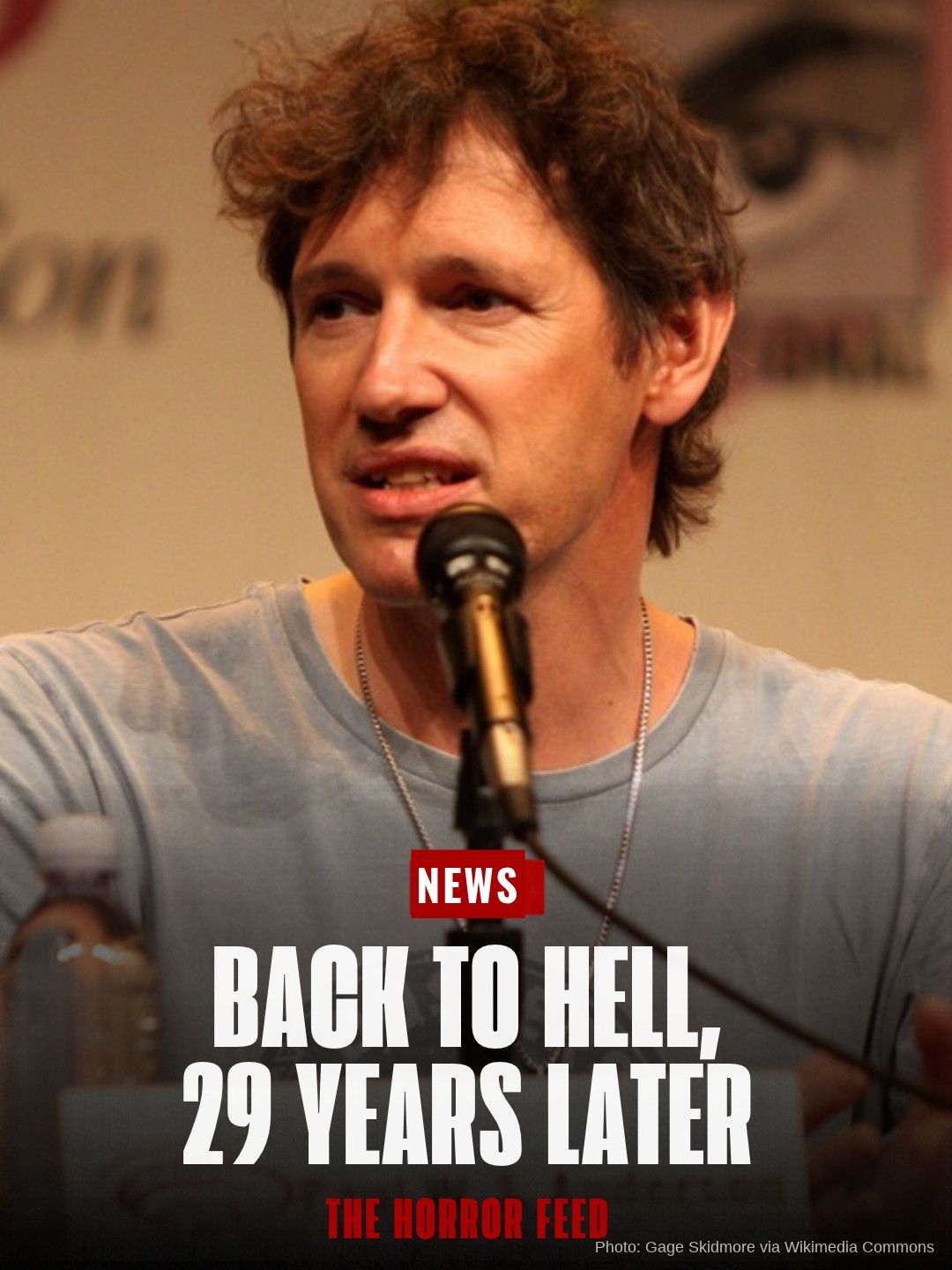
Header photo: Zach Cregger via Wikimedia Commons ( author and license), cropped with text added.

Sources: Dread Central, IGN via Yahoo, TheGamer, JoBlo, The Numbers (Resident Evil), The Numbers (Welcome to Raccoon City), Gulf News, Wikipedia (2026 film), Wikipedia (film series), Wikipedia (Return to Silent Hill), Wikipedia (Iron Lung), Wikipedia (Five Nights at Freddy's 2), Wikipedia (Weapons), Wikipedia (Barbarian).
Recent STories